

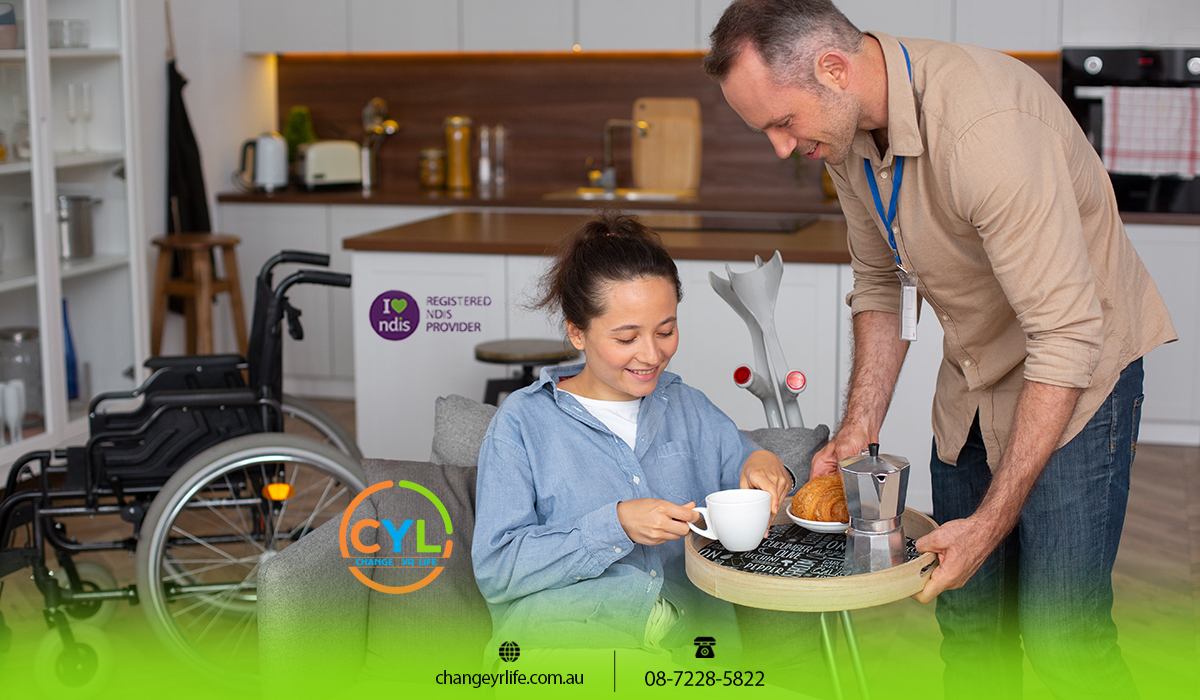
The Truth Behind Disabled Home Care Service You Should Know
The disability care industry is worth billions, yet millions of Australians are still getting substandard support. Here’s why that happens, what the data actually shows, and how to demand better for yourself or the people you love.
Let me be blunt. When I started researching the landscape of disabled home care services Salisbury in Australia, I expected complexity. What I found was something far more pressing: a system that is simultaneously overloaded and misunderstood by the very people who need it most.
Families are navigating funding frameworks, eligibility criteria, and care assessments — all while someone they love needs real, practical support right now. That is not okay. So let’s cut through the noise and talk about what actually matters.
- 5.5M Australians living with disability
- $42B NDIS funding committed by 2026
- 1 in 3 NDIS participants has a psychosocial disability
Why Disabled Home Care Services Are the Backbone of Independent Living
Here’s a stat that should change how you think about disability care: 92% of people with disability prefer living in their own home over residential care facilities. That is not a preference; it is a near-universal consensus. And disabled home care services exist to make that preference a reality.
But what exactly falls under the umbrella of home care? Most people think it’s simply someone coming in to help with showering or cooking. That’s one layer. The full picture is significantly more sophisticated — and significantly more impactful.
Disabled home care services encompass personal care, domestic assistance, community participation, therapeutic supports, medication management, overnight care, and, critically, psychosocial and mental health support. The best providers deliver all of these in coordination, not in isolation.
The reason this matters at a strategic level: when care is fragmented, outcomes collapse. When it is coordinated under one roof, participants report higher well-being scores, fewer hospital presentations, and greater confidence in daily life. That is the ROI of quality care, measured not in dollars but in dignity.
The NDIS mental health disability gap nobody is talking about
Here’s where it gets uncomfortable. The NDIS Mental Health disability category, formally known as psychosocial disability, represents one of the most underserved populations in the entire scheme.
A person with psychosocial disability may experience conditions such as chronic depression, bipolar disorder, schizophrenia, PTSD, or severe anxiety that significantly impact their ability to function in daily life. The disability itself is real, complex, and often invisible, and that invisibility is part of the problem.
Key insight:
Unlike physical disability, NDIS Mental Health disability does not follow a predictable trajectory. Needs fluctuate. Some days, a participant needs intensive support; other days, they need almost none. Traditional care models are not built for that reality, which is precisely why specialist providers matter so much.
The NDIS made significant structural reforms between 2023 and 2025, specifically targeting psychosocial disability, including improved access pathways and revised planning frameworks. The intent is sound. But implementation on the ground? That depends entirely on your provider when you search for Disabled home care services in Salisbury.
What Effective NDIS Mental Health Disability Support Actually Looks Like
I want to give you something concrete here, because vague promises about “person-centred care” are everywhere. Here is what genuine mental health disability support includes at the service delivery level:
- Trauma-informed support workers trained to de-escalate, not just supervise
- Flexible rostering that responds to symptom fluctuation rather than rigid scheduling
- Community access support that builds confidence and reduces social isolation
- Collaboration with allied health professionals such as psychiatrists, psychologists, OTs
- Crisis response planning is embedded into every participant’s support plan.
- Cultural competency is especially critical in diverse communities like Salisbury
If your current provider cannot demonstrate all of the above, you are not getting the full value of your NDIS plan. Full stop.
How to Actually Choose the Right Disabled Home Care Provider
Most articles tell you to “check their qualifications” and “ask about their approach.” That is entry-level advice. Let me give you the framework I would use if it were my family member.
Step 1: Audit their workforce, not their brochure:
You need to ask any potential provider: what is your staff-to-participant ratio? How do you handle unplanned absences? What is your average staff tenure? High turnover in disability care is a red flag; continuity of support workers is one of the strongest predictors of participant outcomes.
Step 2: Test their crisis capability
For anyone accessing support for NDIS Mental Health disability, ask this directly: “If my family member experienced a mental health crisis at 10pm on a Sunday, what happens next?” Listen carefully. Vague answers reveal gaps. A quality provider has a documented, practised, and staffed response, not a referral to call 000.
Step 3: Evaluate goal alignment, not just task completion
“The best disabled home care services do not just do things for people; they build the capacity for people to do things for themselves.”
You need to look for providers who build NDIS plans around participant goals, not around billable line items. This distinction separates compliance-focused operators from genuinely participant-driven organisations. Ask to see examples of how they’ve helped previous participants build independence over time.
The Salisbury Context: Why Location Matters More Than You Think
Disability care is not a one-size-fits-all market. The City of Salisbury, in Adelaide’s northern suburbs, has specific demographic realities that shape what quality care looks like here. It’s one of South Australia’s most culturally diverse regions, with high rates of working-class families managing disability alongside employment and other caregiving responsibilities.
That means a provider operating effectively in Salisbury needs to understand language barriers, financial literacy around NDIS funding, cultural attitudes toward mental health, and the geography of community participation across the northern suburbs. A provider parachuting in from a CBD head office rarely has that contextual intelligence.
Local presence matters. This is why community-embedded organisations consistently outperform large, centralised operators in terms of participant satisfaction scores. The relationships built in the community. With GPs, schools, cultural groups, and community centres are invisible in a service agreement but absolutely critical to real-world outcomes.
Maximising Your NDIS Plan: The Strategic Moves Most Participants Miss
Whether you are a new participant or you have been in the scheme for years, there are consistent opportunities to get more value from your funding that most families never act on.
- You can request a plan review if your circumstances change; you do not have to wait for the scheduled review cycle.
- Use Capacity Building funding strategically. It is designed to reduce long-term dependence, not extend it.
- You can ask your provider about service agreements and ensure there’s no lock-in that restricts your right to switch.
- Engage a Support Coordinator or Local Area Coordinator if you are feeling overwhelmed. This is what they are for.
- Document everything: goals achieved, challenges faced, support hours used. This evidence strengthens your next plan.
The participants who get the most from the NDIS are not necessarily those with the highest funding. They are those with the most informed and engaged support ecosystem around them. Your provider should be actively helping you build that ecosystem, not passively delivering hours.
The Future of Home-Based Disability Support
Technology is beginning to reshape what’s possible in disabled home care services. Remote monitoring, telehealth integration, AI-assisted scheduling, and digital communication tools are reducing the friction between participants and their support teams. But, and this is critical, technology is a layer on top of human connection, not a replacement for it.
The most effective care model of the next decade will combine responsive human support with smart systems that reduce administrative burden and give participants more real-time control over their care. Providers who are already investing in these capabilities will be the ones worth partnering with as the NDIS landscape continues to evolve.
None of this is theoretical. Every framework, every criterion, every question I’ve laid out in this article has a direct impact on real people’s daily lives. The gap between mediocre disability support and exceptional disabled home care services is not a small one. It is the difference between surviving your circumstances and genuinely building toward a life you want.
Conclusion
At Change Yr Life, we provide specialist disabled home care services, including dedicated NDIS Mental Health disability support in Salisbury. We’re local, we’re qualified, and we build care around your goals, not a checklist. If you or someone you love deserves better support, it is time to make the call.